
MCA Debt Relief for Restaurants: When Slow Nights Meet Daily Debits
By Century Relief ·
Quick answer
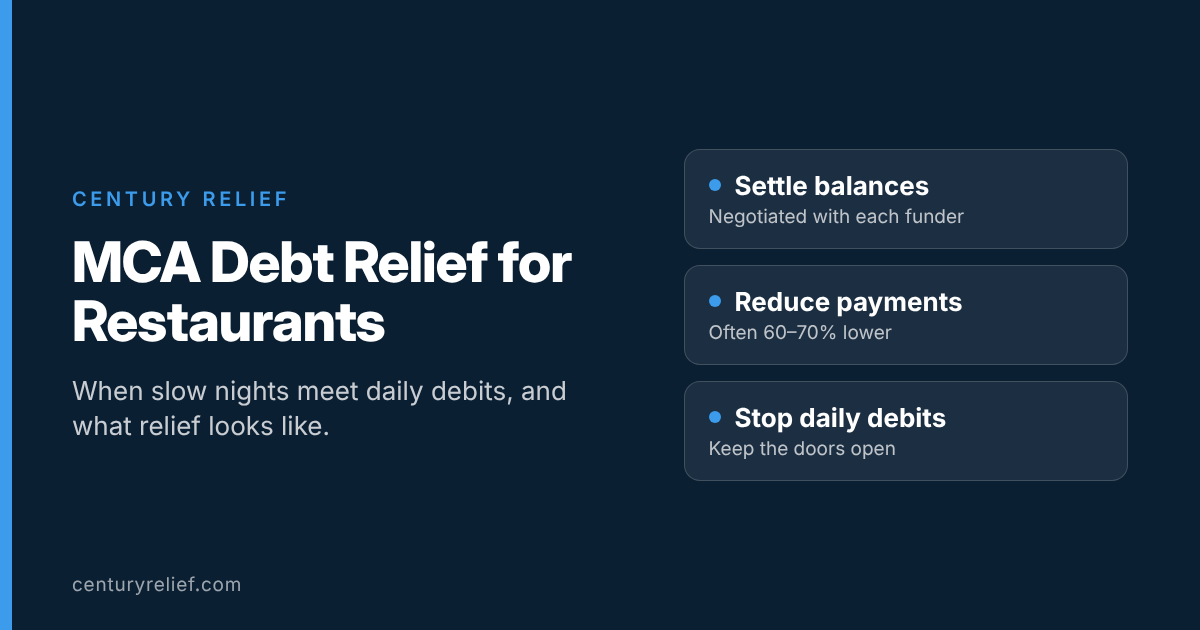
Restaurants get squeezed by merchant cash advances because sales rise and fall by the night and the season, while MCA debits come out every business day. Relief usually means settling the balances with each funder, reducing the payments and stopping the daily or weekly withdrawals so the restaurant can keep operating. Century Relief often reduces combined payments by 60–70%; results vary by case.
Why merchant cash advances hit restaurants so hard
- Sales change every night. A rainy Tuesday and a packed Saturday can be thousands of dollars apart. A fixed daily ACH debit doesn't change with them.
- Seasons are real. Patio season, holidays and tourist months carry the year. MCA payments keep coming through January and February.
- Costs come first. Food, payroll and rent can't wait. When the debit lands first, owners start skipping their own pay, then vendors.
- Split funding takes the first cut. On a split-funded advance, the processor sends the funder its percentage of card sales before the money reaches you.
How stacking starts in a restaurant
It usually begins with one slow stretch: a cold month, a broken walk-in, a lost catering account. One advance covers the gap. Then a broker calls with a second offer to cover the first payment. A few months later, three or four funders are debiting the account every day and most of the revenue is gone before the kitchen opens. See realistic ways out of an MCA contract.
What relief looks like
- A full review. We look at every advance, the daily and weekly debits, and your real sales by day and season.
- Settlement with each funder. We negotiate directly with each MCA funder to settle the balance, reduce the payments and stop the daily or weekly withdrawals.
- A payment the restaurant can carry. Century Relief often reduces combined payments by 60–70%, so the restaurant can keep operating. Results vary by case.
- Protection if a funder sues. If a funder files a lawsuit, we hire an independent attorney on the client's behalf. See what happens when an MCA company sues.
What to do this week
- Don't take another advance to cover the last one.
- Pull your contracts and the last three months of bank statements so you can see every debit.
- Check for a reconciliation clause. Many MCA contracts let you request lower payments when sales drop. Ask in writing.
- Answer any lawsuit or default notice quickly. Deadlines move fast. Here's when a funder can freeze your bank account.
Frequently asked questions
Can a restaurant settle merchant cash advance debt?
Yes. Many restaurant owners settle MCA balances by negotiating with each funder. A settlement can reduce what you owe, lower the payments and stop the daily or weekly withdrawals. Results vary by case.
What is split funding on a restaurant MCA?
Split funding means your card processor sends a fixed percentage of each day's card sales straight to the funder before the money reaches your account. Payments drop on slow days, but the funder gets paid before you cover food, payroll or rent.
Should I take another advance to cover a slow season?
Usually not. Stacking a second or third advance adds another daily debit and makes the next slow stretch harder. Get a review of every advance before you sign anything new.
What happens if my restaurant gets sued by an MCA funder?
Respond to the lawsuit before the deadline. If a funder sues a Century Relief client, we hire an independent attorney on the client's behalf.