
MCA Debt Settlement: Pros and Cons
By Century Relief ·
Quick answer
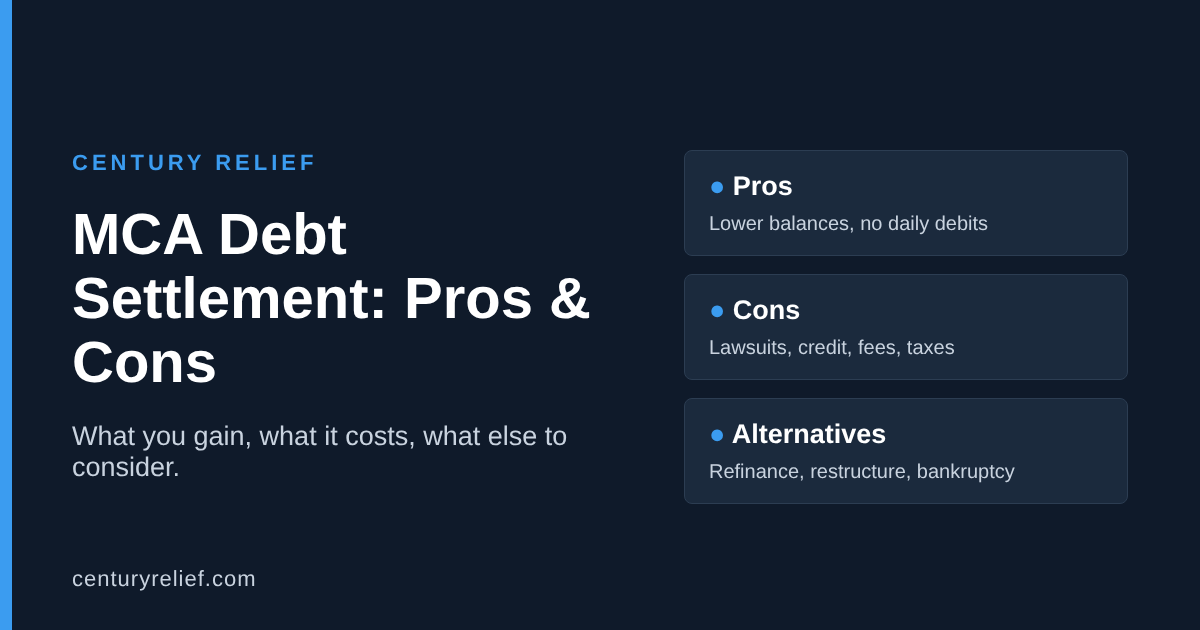
The main advantages of MCA debt settlement are a lower total balance, an end to daily or weekly debits and one plan for every funder. The main drawbacks are that funders may sue while negotiations go on, business credit usually takes a hit, there are fees, forgiven debt can be taxable and not every funder agrees. Settlement tends to fit a business with several advances it can no longer carry but a real business underneath; refinancing or restructuring can fit better when the business can still pay in full over a longer term.
The pros
- A lower balance. Funders often accept less than the full purchased amount, especially when the alternative is a business that can’t pay at all.
- An end to daily or weekly debits. Settled advances stop pulling from your account every business day, which frees up cash for payroll and suppliers.
- One plan for every funder. Instead of juggling separate debits and calls, every advance is handled in one program.
- The business keeps running. Unlike closing or a bankruptcy filing, settlement lets you keep operating while balances are resolved.
The cons
- Funders can sue. Negotiations take time, and some funders file suit along the way. Century Relief hires an independent attorney on the client’s behalf if that happens. See what happens when an MCA company sues.
- Credit takes a hit. Business credit usually suffers, and a personal guarantee means an unsettled funder can pursue you personally. See how settlement works with a personal guarantee.
- There are fees. Any settlement program has a cost. Ask how fees are calculated and when they are charged before you sign.
- Forgiven debt can be taxable. The amount a funder writes off may count as income for the business. Talk to your accountant.
- Not every funder settles. Some hold out longer than others, and results vary by case.
The alternatives
- Refinancing with a term loan, if the business still qualifies. Note that SBA 7(a) and 504 loans can no longer be used to pay off merchant cash advances.
- Consolidation or restructuring, which stretches payments out over a longer term without reducing what you owe. See how MCA consolidation works and business debt restructuring.
- Bankruptcy, usually Chapter 11 or Chapter 7, which is a legal process with its own costs and consequences. Talk to a bankruptcy attorney.
Here is a fuller comparison of MCA debt relief options.
Who settlement fits
- A business with two or more advances it can no longer carry.
- Sales that are steady enough to keep operating once the debits stop.
- An owner who wants to stay open rather than close or file for bankruptcy.
Not sure which fits? Here is how to choose an MCA debt relief company, and how MCA debt settlement works step by step.
Frequently asked questions
Is MCA debt settlement a good idea?
It can be when a business has several advances it can no longer carry but can keep operating with lower payments. It is less suited to a business that can still pay in full over a longer term or one that is closing for good.
Can a funder sue during MCA settlement?
Yes. A funder can sue while negotiations are going on. If that happens, Century Relief hires an independent attorney on the client's behalf.
Does MCA settlement hurt credit?
It usually affects business credit, and a personal guarantee means the owner can be pursued personally if a funder isn't settled. The effect lessens once balances are resolved.
Is forgiven MCA debt taxable?
It can be. Forgiven debt may count as income for the business. Ask your accountant how it applies to you.
How much can MCA settlement lower my payments?
It depends on the funders, the balances and the business. Century Relief often lowers the combined daily or weekly payments by 60–70%; results vary by case.