
Business Debt Forgiveness: What’s Real for MCA Debt
By Century Relief ·
Quick answer
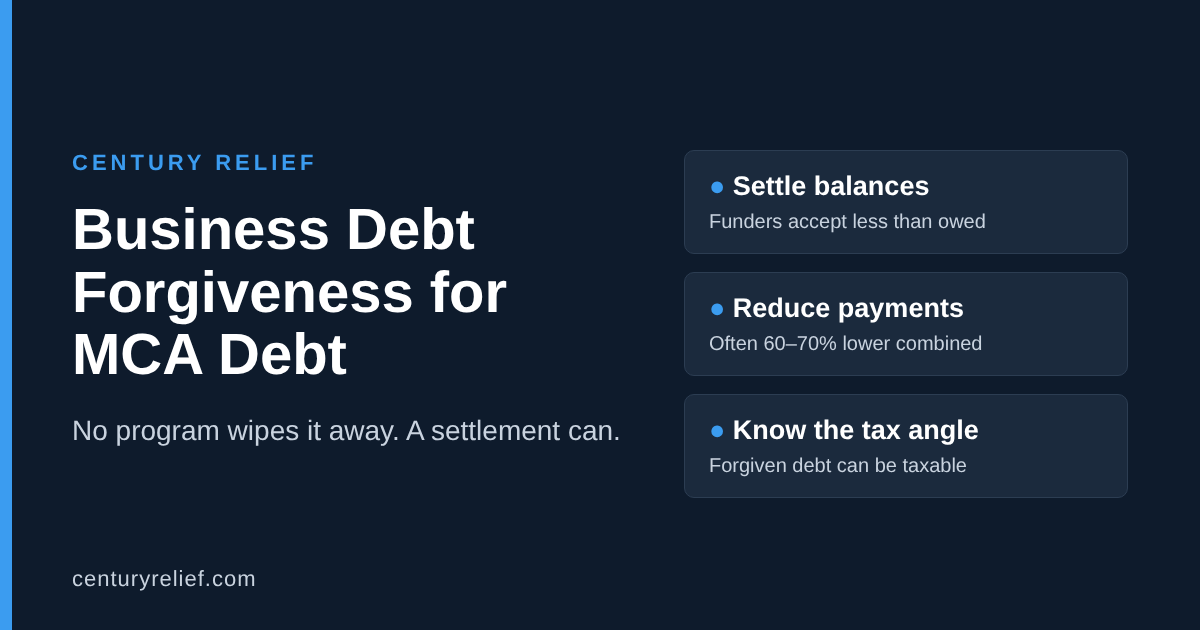
Business debt forgiveness usually doesn’t mean a program that wipes debt away. For merchant cash advances, it means negotiating a settlement where each funder accepts less than the full balance, and the payments and daily or weekly withdrawals are reduced or stopped. Century Relief often reduces combined payments by 60–70%; results vary by case. Forgiven business debt can be taxable, so talk to a tax professional.
Is there a business debt forgiveness program?
Not for merchant cash advances. An MCA is a private contract to buy future receivables, and there’s no government program that cancels it. When people search for small business debt forgiveness, what is actually available for MCA debt is a negotiated settlement with each funder.
What “forgiveness” really means for MCA debt
- A reduced balance. A funder agrees to accept less than the amount still owed, and the difference is forgiven.
- Lower payments. The settled amount is paid on a schedule the business can actually carry.
- An end to daily or weekly withdrawals. The original debits stop once a settlement is in place.
- Released liens. When a position is settled and paid, the funder should release its UCC lien. Here’s how UCC lien removal works.
How Century Relief settles MCA balances
- A full review. We look at every advance, the daily and weekly debits and your real deposits.
- Settlement with each funder. We negotiate directly with each MCA funder to settle the balance, reduce the payments and stop the daily or weekly withdrawals.
- A payment the business can carry. Century Relief often reduces combined payments by 60–70%; results vary by case.
- Protection if a funder sues. If a funder files a lawsuit, we hire an independent attorney on the client’s behalf. Here’s what happens when an MCA company sues.
Is forgiven business debt taxable?
It can be. When a lender or funder forgives part of a balance, the forgiven amount may count as income for tax purposes, and some exceptions can apply. Every business’s situation is different, so ask your accountant or tax professional how a settlement would affect your return before you sign.
Business debt forgiveness vs. consolidation vs. a new advance
| Option | What happens to the balance | Watch out for |
|---|---|---|
| Settlement | Funders accept less than the full balance | Possible tax on the forgiven amount |
| Consolidation | Balances are combined into one payment; nothing is forgiven | The total cost of the new terms. See MCA debt consolidation |
| A new advance | Old balances are paid with new debt | Another daily debit and a higher total cost |
Signs settlement may fit your business
- The combined MCA debits take more than the business can spare most weeks.
- You’re considering another advance to make this week’s payments.
- A funder has sent a default notice or is threatening to call your customers. Read what to do when a funder contacts your customers.
- You personally guaranteed the advances. See personal guarantees and MCA settlement.
Frequently asked questions
Is there a government program that forgives small business debt?
Not for merchant cash advances. MCAs are private contracts, so relief comes from negotiating a settlement with each funder rather than from a forgiveness program.
Can merchant cash advance debt be forgiven?
Part of it can. In a settlement, a funder agrees to accept less than the full balance, and the remaining amount is forgiven. Century Relief negotiates these settlements directly with each funder.
Is forgiven business debt taxable?
It can be. A forgiven balance may count as income, and some exceptions apply. Ask your accountant or tax professional before you settle.
How much lower will my MCA payments be?
It depends on the funders, the balances and your situation. Century Relief often lowers the combined daily or weekly payments by 60–70%; results vary by case.
What happens if a funder sues during settlement?
Respond before the deadline. If a funder sues a Century Relief client, we hire an independent attorney on the client’s behalf.