
MCA Debt Relief for Home Health Care Agencies
By Century Relief ·
Quick answer
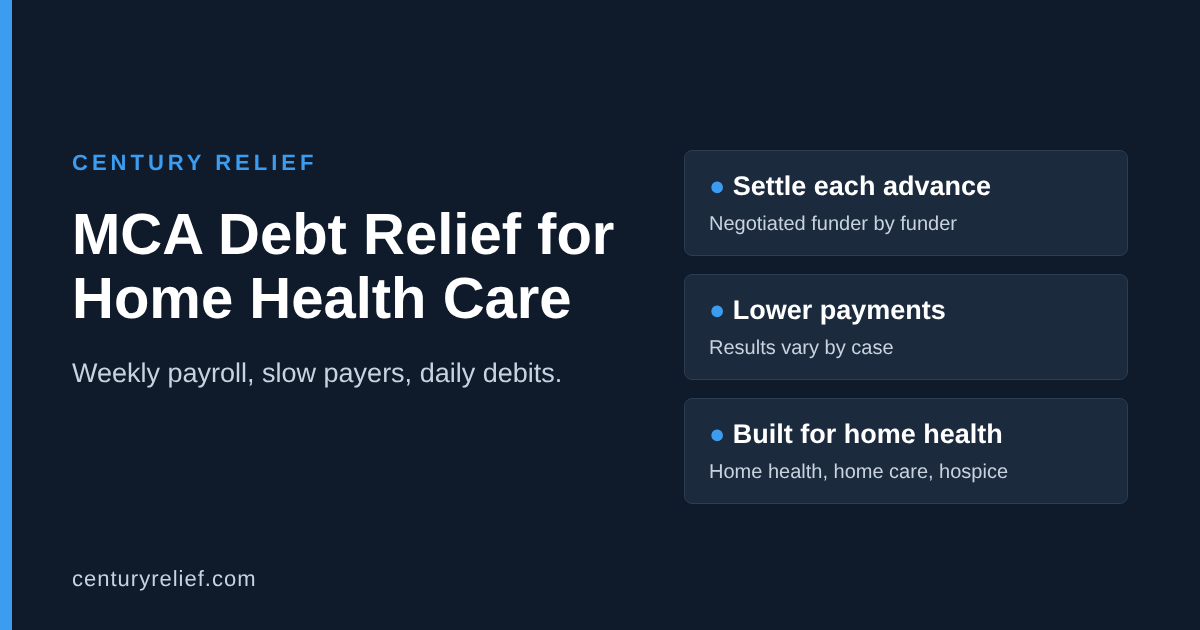
Home health and home care agencies get squeezed by merchant cash advances because caregivers are paid every week while Medicare, Medicaid and insurers often pay weeks or months after the visit, and MCA debits come out every business day. Relief usually means settling the balance with each funder, reducing the payments and stopping the daily or weekly withdrawals. Century Relief often lowers the combined daily or weekly payments by 60–70%; results vary by case.
Why merchant cash advances hit home health agencies so hard
- Payroll every week. Caregivers, nurses and aides have to be paid on time, along with payroll taxes and workers’ comp.
- Slow reimbursement. Medicare, Medicaid, managed care plans and private insurers often pay weeks or months after the visit, and some claims are denied and have to be resubmitted.
- Payment holds and audits. A payer review, a billing error or a recoupment can stop or reduce payments with little warning.
- Thin margins. Reimbursement rates leave little room once wages and travel are paid, so a daily MCA debit takes much of what is left.
How stacking starts in a home health agency
It often begins with a new contract, a hiring push or a batch of delayed claims. One advance covers payroll. Then the daily debit eats into the next payroll, and a broker offers a second advance to bridge the gap. A few months later, several funders are pulling from the same account. See realistic ways out of an MCA contract.
What relief looks like
- A full review. We look at every advance, the daily and weekly debits, your payroll cycle, your claims aging by payer and any payment holds or recoupments.
- Settlement with each funder. We negotiate directly with each MCA funder to settle the balance, reduce the payments and stop the daily or weekly withdrawals.
- A payment the agency can carry. Century Relief often lowers the combined daily or weekly payments by 60–70%; results vary by case.
- Protection if a funder sues. If a funder files a lawsuit, we hire an independent attorney on the client’s behalf. See what happens when an MCA company sues.
What to do this week
- Don’t take another advance to cover payroll or the last advance.
- Pull your contracts, three months of bank statements and an aging report of claims by payer.
- Don’t redirect payer deposits to dodge the debits without advice; most contracts treat it as a default.
- Read up on stopping the debits before you call your bank. Here’s how settlement stops daily MCA withdrawals.
Frequently asked questions
Can a home health agency get out of merchant cash advance debt?
Yes. Most home health and home care agencies settle each advance with its funder, which reduces the balance and the payments and stops the daily or weekly withdrawals. Century Relief negotiates directly with each funder.
Why do MCA payments hit home health agencies so hard?
Caregiver payroll goes out every week, but Medicare, Medicaid and insurers often pay weeks or months after the visit. MCA debits come out every business day, so the gap keeps growing.
What if a payer holds or recoups payments?
A payment hold, audit or recoupment can cut receipts overnight while the MCA debits keep coming. Tell us right away. A sudden drop in receipts matters in any conversation with your funders.
How much can a home health agency lower its MCA payments?
It depends on the funders, the balances and the business. Century Relief often lowers the combined daily or weekly payments by 60–70%; results vary by case.
Do you work with home care and hospice agencies too?
Yes. We work with home health, private-duty home care, personal care and hospice agencies, along with other healthcare businesses, in all 50 states.